


The holiday music fades and the sales rush ends, giving way to a more complex operational reality: managing reverse logistics and, with it, the device headache. For you, who manage frontline teams (logistics, warehouse, retail), the real problem isn’t the boxes coming back, but the cost generated by technological inactivity.
Facing this friction, Applivery is the Unified Endpoint Management (UEM) platform designed to eliminate device management pain and turn it into an operational advantage, by integrating IT control with development agility.
The undeniable figure: the "Zombie Device"
Your employee relies on rugged devices or tablets to process returns in demanding environments. When these fail, they become a “zombie device” that generates an unacceptable business cost.
The impact of downtime is clear: a single hour of inactivity for a frontline worker (warehouse, logistics) costs the company an average of $3,300 in lost revenue and nearly $500 in operational costs per hour of failure. This alarming estimate comes from VDC Research, key analysts in enterprise mobility, and highlights that the Total Cost of Ownership (TCO) is defined by downtime.

How does Applivery achieve IT control and development agility?
Applivery’s value lies in its dual approach, which attacks the root causes of “zombie” device inactivity.
Solution for IT and Operations: eliminating friction and reducing support cost
For IT, Applivery offers the necessary control and automation to manage complex fleets, including rugged devices:
-
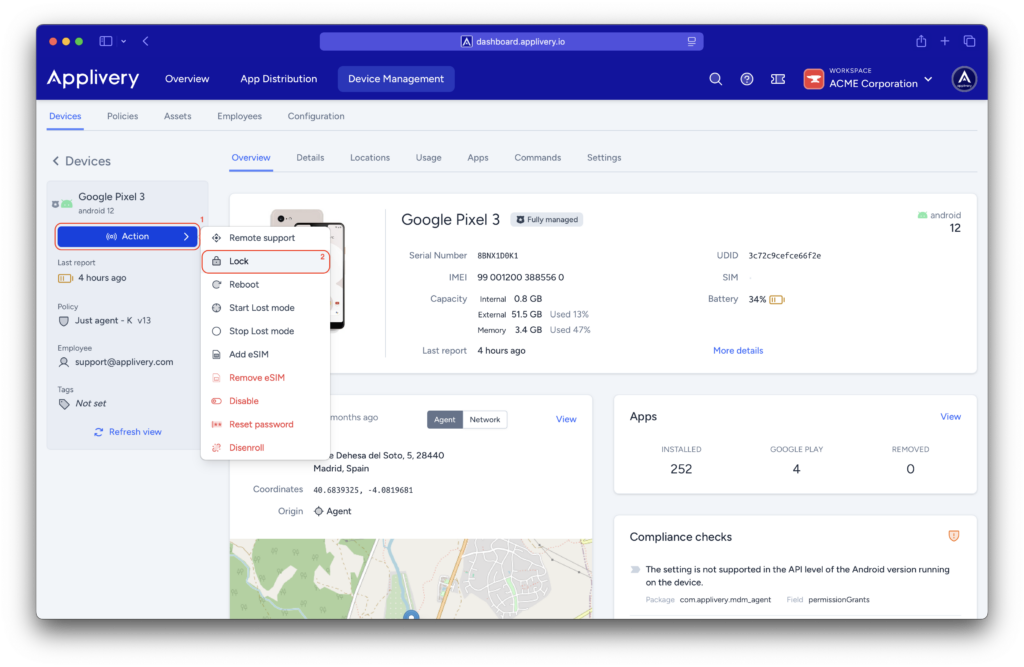
Zero-Touch enrollment and Unified Management allow a returning device to be reconfigured and operational in minutes, eliminating the need for manual intervention and ending tool fragmentation.
-
Direct support savings are significant: automated configurations and Kiosk Mode prevent most end-user support tickets. The industry, citing HDI and MetricNet, places the average cost of a tier 1 support ticket between $15 and $25 per ticket, generating a simple and direct ROI for the IT team.
Solution for Development and DevOps: accelerating critical failure correction
Update speed is vital, ensuring industrial applications are always at their optimal version:
-
Native CI/CD integration: Applivery integrates with CI/CD tools for the automatic deployment of critical updates (builds) in the background.
-
The impact of DORA: this report shows that teams with automated CI/CD (Elite) have a deployment frequency 182 times higher than low performers, meaning that failure correction is 2,293 times faster. This increased speed is key to minimizing exposure to the $3,300/hour of downtime.
Applivery's unique value proposition for agile B2B
Applivery is not just a technical tool; it builds a more resilient and agile operation by aligning IT security with development speed.
-
Real productivity: your employees have tools running at 100%.
-
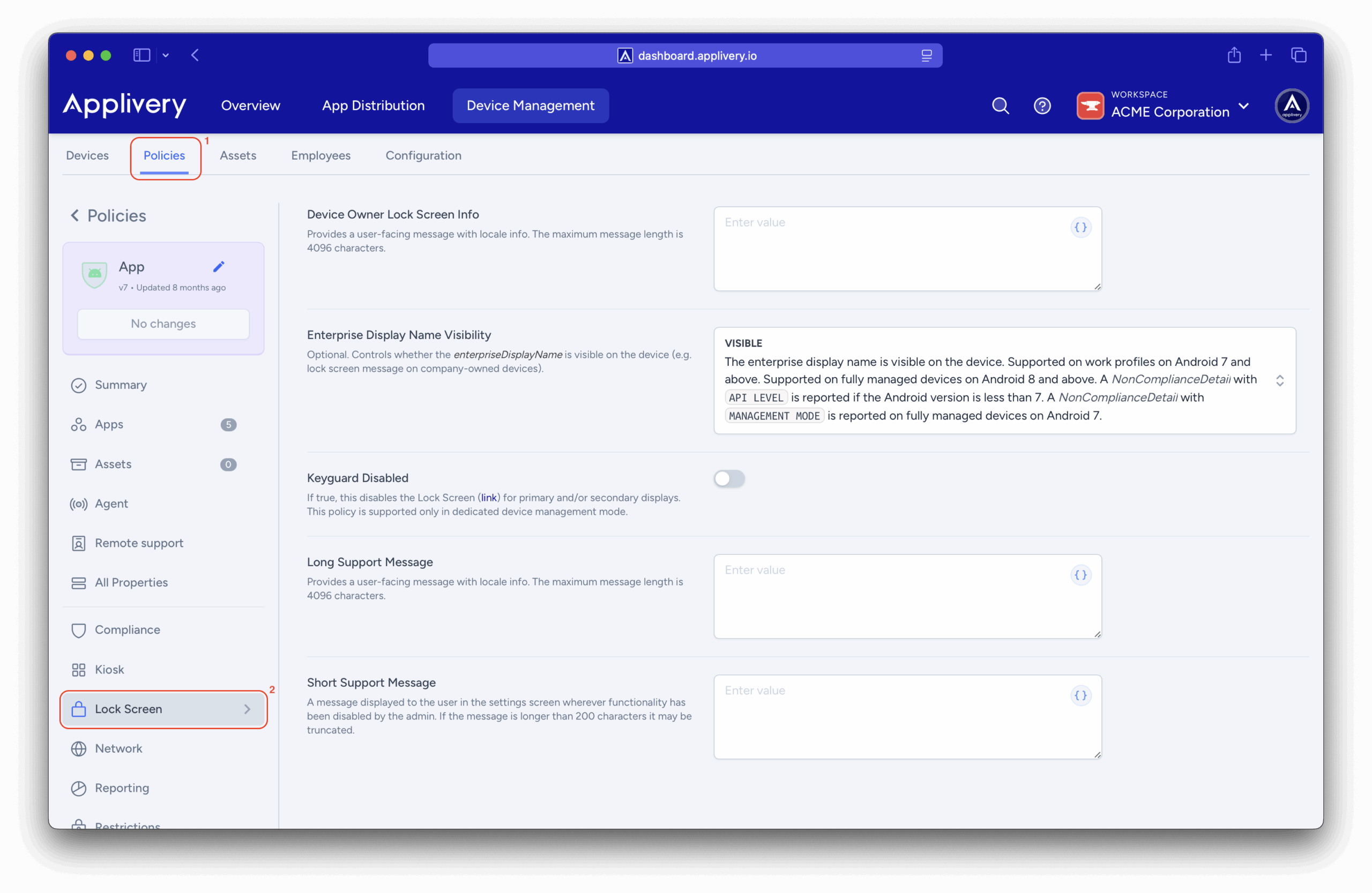
Strategic resilience: our API-first architecture allows for building a modular and robust strategy, protecting the company from single-vendor dependence.
-
Flawless logistics: a returning device can be reconfigured in minutes, eliminating the hidden costs of downtime.
Transform downtime into operational agility
Device frustration does not have to be part of the returns season. Invest in a solution that manages technology, productivity, and your operation’s ROI.
Request a personalized demo with our team and discover how Applivery can transform downtime into operational agility.
Frequently Asked Questions (FAQ)
How does Applivery address downtime for rugged devices in warehouses?
We utilize the Zero-Touch Enrollment process (for Android Enterprise) and centralized Kiosk Mode management. This allows returning devices to be automatically reconfigured in minutes, minimizing the time they remain "zombie" and eliminating the need for manual intervention. Our unified dashboard also offers complete visibility into battery and application status, preventing failures.
How can Applivery justify the ROI to my IT team?
ROI is primarily justified through the reduction of TCO (Total Cost of Ownership) and support savings. By preventing users from generating tickets thanks to Zero-Touch provisioning and Kiosk Mode control, the average cost of each ticket is saved, which the industry, according to organizations like HDI and MetricNet, places between $15 and $25 per ticket. Furthermore, costly operational incidents of $3,300 per hour associated with worker inactivity are avoided.
Is my organization "locked in" to Applivery with this solution?
No, quite the opposite. One of our key differentiators is Resilience through Modularity, thanks to our API-first architecture. This allows you to build flexible and scalable DevOps workflows, without depending on a single vendor or their business decisions. This modularity gives you total control over your strategy.