


The Mobile World Congress 2026 has shifted from theoretical AI promises to tangible, “thinking” products. After three consecutive years at Fira Gran Via, this edition—themed “The IQ Era”—confirmed that intelligence is no longer a bolt-on feature; it’s the engine driving autonomous networks and devices.
From Applivery, our mission was to prove that agility and control can coexist without the traditional bureaucratic friction. As a European-born UEM, our platform is consolidating its position as the trusted alternative for organizations that demand strict compliance (GDPR, ENS, HIPAA) and data residency within the EU territory where non-European legacy vendors often struggle to provide proximity and transparency.
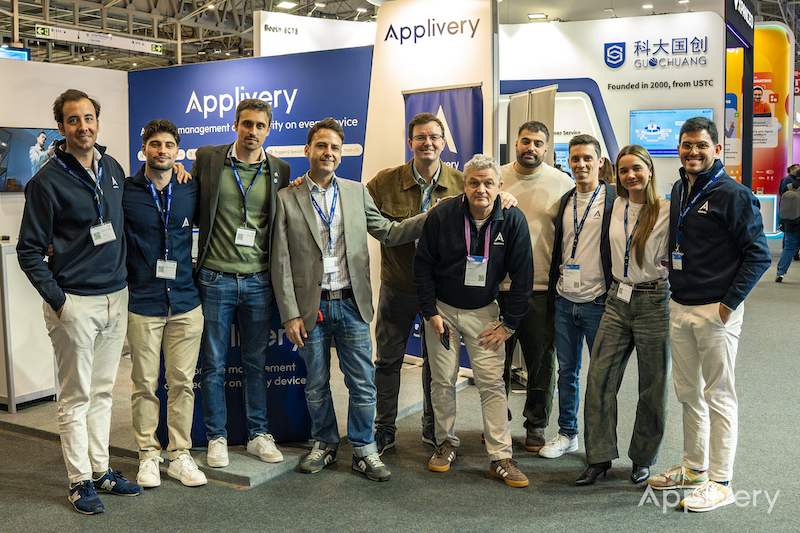
Key trends shaping the enterprise landscape
If you manage IT infrastructure, these are the shifts that will redefine your priorities this year:
Agentic AI and network autonomy
The standout trend this year is Agentic AI. Industry leaders like Huawei demonstrated how AI now executes complex tasks independently, from self-healing network nodes to real-time traffic optimization. This aligns perfectly with our vision of AEM (Autonomous Endpoint Management): devices that proactively maintain their own security posture and health.
The EURO-3C project: digital sovereignty in action
Data sovereignty was the dominant boardroom conversation. The EURO-3C initiative is gaining momentum, creating AI and cloud infrastructures under European standards. For companies seeking efficiency without surrendering control, this validates the need for a management layer that is intuitive yet built on local, rigorous security frameworks.
Direct-to-cell satellite connectivity
The era of “no signal” zones is effectively over. Carriers like Orange and Deutsche Telekom have set firm dates for direct-to-cell satellite services for standard smartphones. This is a game-changer for logistics and field operations, ensuring that every terminal in your fleet remains under the UEM radar, regardless of the operator’s terrestrial coverage.
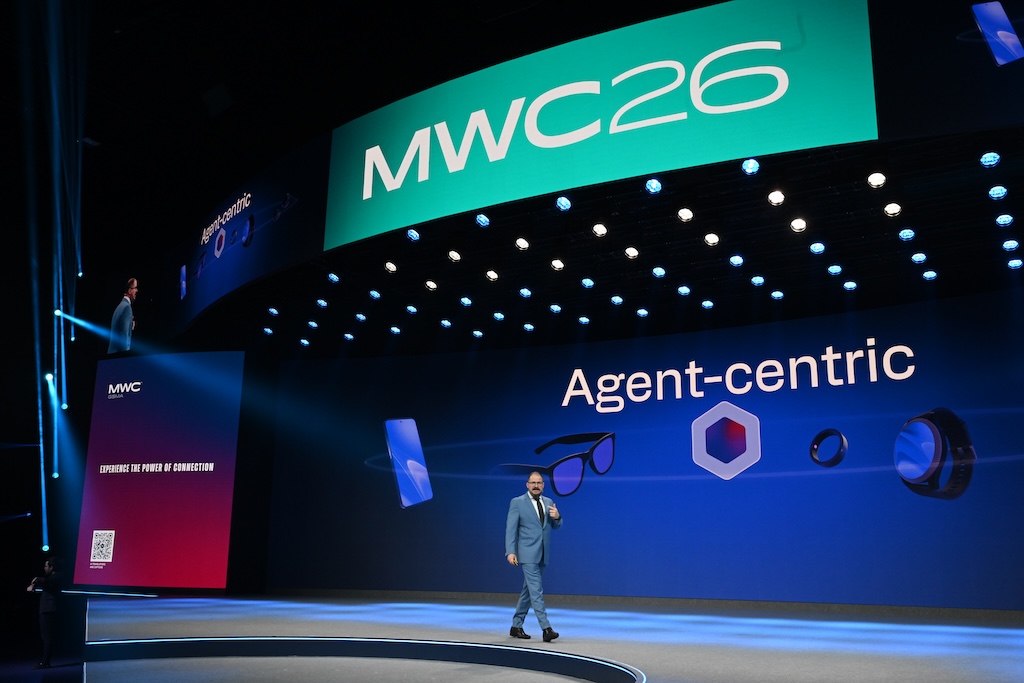
Tech highlights: from glass screens to physical interaction
Hardware has taken a massive leap toward specialized business functionality:
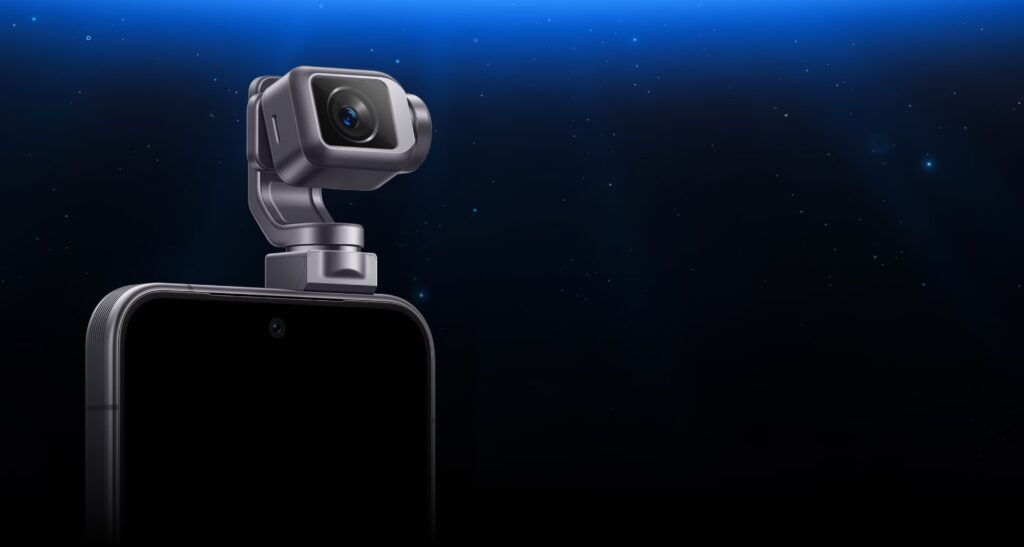
- The Honor “Robot Phone”: the undisputed star of the show. A device that physically moves and reacts via AI. For remote technical support or field inspections, the potential for a device that “self-orients” its camera to assist the user is immense.
- Samsung Galaxy Z TriFold: mobile productivity finally makes sense. A triple-folding device that transforms from a smartphone into a full-scale tablet in seconds—ideal for executives who need to ditch the laptop on short trips without losing the “big screen” workflow.
- Zebra and industrial intelligence: during our technical sessions, we demonstrated how the latest Zebra rugged devices integrate with Applivery to manage digital twins in automated warehouses. This is hardware built for the long haul, managed at scale through Zero-touch deployment.
The IT leaders’ executive briefing with Applivery
On Tuesday night, we moved away from the noise of the Fira to host an exclusive executive gathering with top CIOs, CISOs, and IT Managers, alongside strategic partners like OffshoreTech, Crowdstrike, Google, and Zebra.
Away from the microphones, the conversation focused on critical decision-making: protecting infrastructure in an AI-driven threat landscape, solving the IT talent gap, and leveraging automation to reclaim time from repetitive tasks. The consensus was clear: the future of enterprise mobility belongs to those who remain agile enough to innovate but sovereign enough to own their technology.
Beyond the MWC hype
MWC 2026 has shown us that while devices are getting smarter, their management must get simpler. We return from Barcelona confident that Applivery is the missing piece for organizations looking to turn the “IQ Era” into an operational advantage rather than a management nightmare.
Want to see how these innovations apply to your specific device fleet?