

Sustainability in IT is no longer just about compliance or branding. It’s directly tied to how you manage your devices. Every corporate device consumes energy, requires maintenance, and eventually gets replaced. That lifecycle has a direct impact on your company’s carbon footprint.
For years, the answer seemed obvious: buy more efficient hardware. But more organizations are starting to realize something different. Sustainability doesn’t start with what you buy, it starts with how you manage what you already have.That’s where platforms like Applivery come in, within the MDM and UEM space.
unlimited trial of Applivery
What is MDM and its role in IT sustainability
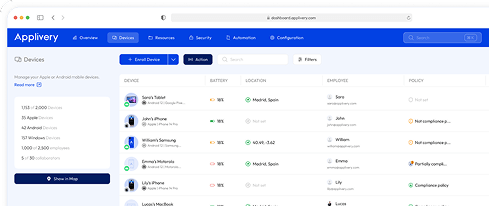
MDM (Mobile Device Management) is a platform that allows you to manage, automate, and maintain corporate devices remotely.
Beyond the technical definition, its impact on sustainability is clear:
- It reduces the need to replace devices
- It optimizes performance and energy consumption
- It eliminates inefficient manual processes
- It enables data-driven decision-making
This completely changes the equation. What used to be a hardware refresh problem becomes a management problem.
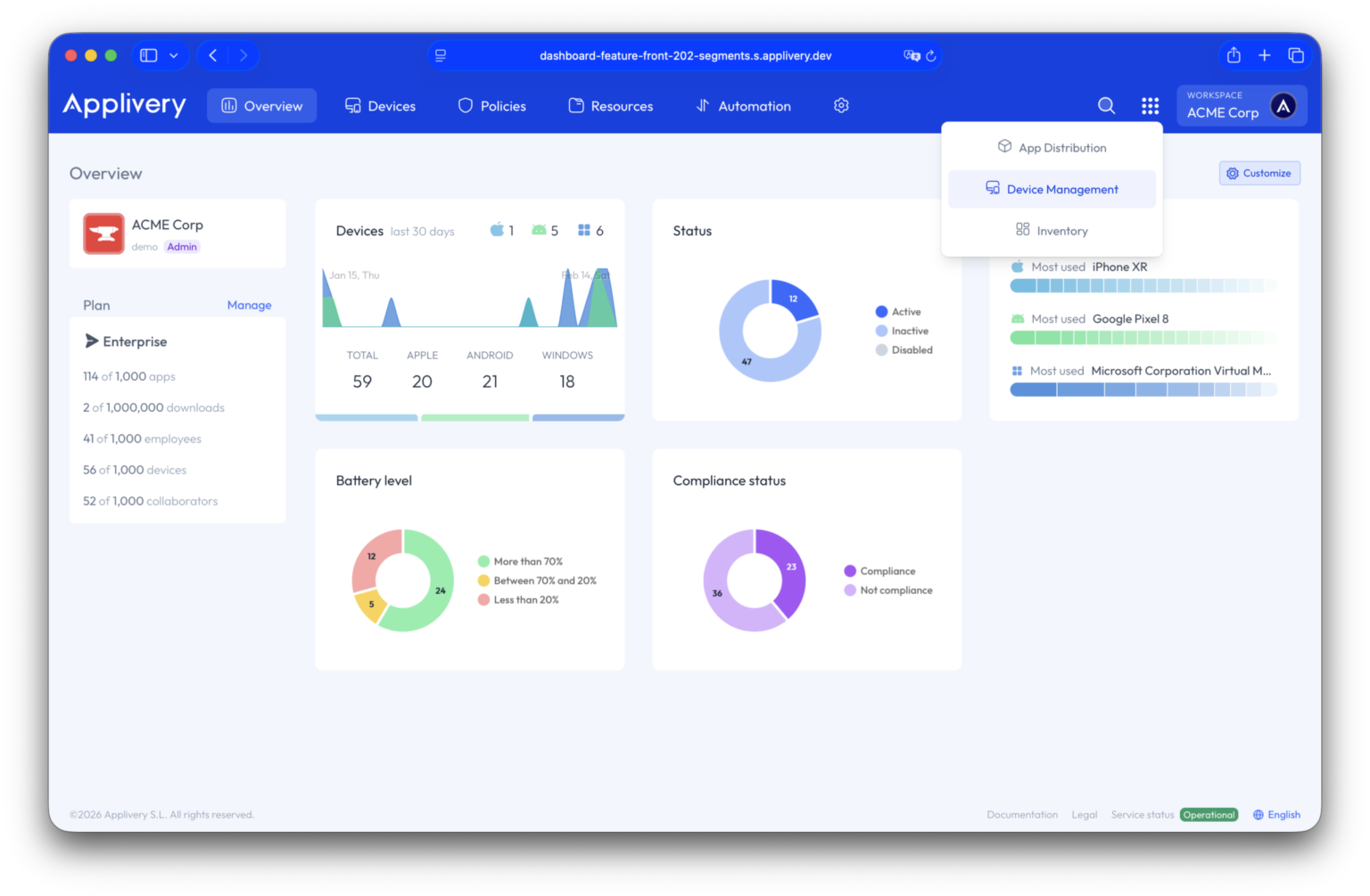
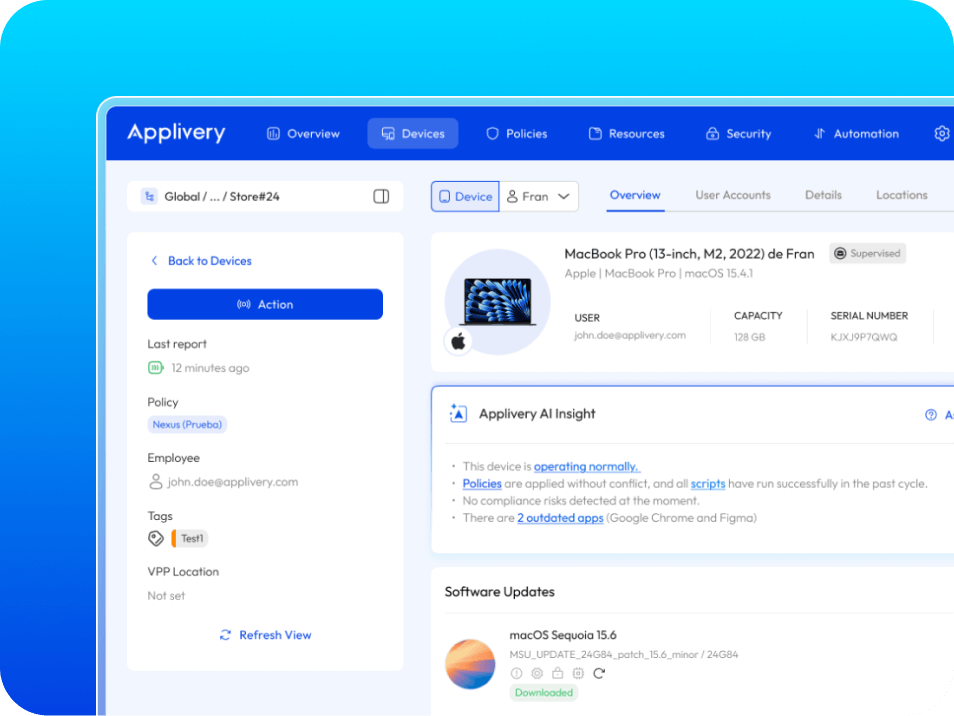
Applivery centralizes this management in a single platform, automating tasks such as provisioning, patching, and policy enforcement across Apple, Android, and Windows devices without requiring manual intervention on each device.
The invisible lifecycle of corporate devices
In many organizations, devices are replaced every three to four years, not because they need to be, but because that’s how it’s always been done. The problem is that this approach isn’t data-driven.
In day-to-day operations, the pattern is predictable. Devices that could still perform well are replaced too early, underused devices coexist with overloaded ones, and many decisions are made without real visibility into the fleet. The result is a direct impact on both costs and sustainability. When you don’t know what’s really happening, the easiest decision is to replace.
The shift: from device management to lifecycle management
According to Gartner, the endpoint management market is evolving toward more automated models, where the goal is no longer just to configure devices, but to keep them in an optimal state continuously.
This shift is important because it redefines the role of IT. It’s no longer about reacting to incidents, but preventing them. Keeping each device within defined parameters without constant intervention. When that happens, devices last longer, generate fewer issues, require less manual work, and don’t need to be replaced prematurely. That’s when sustainability stops being an abstract goal and becomes a direct outcome.
Why devices age faster than they should
Devices don’t become obsolete just because time passes. In most cases, they degrade due to poor management.
A device deteriorates when:
- It doesn’t receive updates
- It runs unnecessary processes
- It has unmanaged applications
- It accumulates unresolved issues
A well-managed device ages more slowly. It maintains performance, experiences fewer incidents, and remains useful far beyond its expected lifecycle.
4 ways MDM reduces your IT carbon footprint
In practice, MDM platforms like Applivery optimize device lifecycle and reduce environmental impact without adding operational burden to IT teams.
| Lever | What changes in operations | Sustainability impact |
|---|---|---|
|
Extended device lifespan |
Automated updates, app control, and usage policies |
Fewer replacements. Less e-waste |
|
Fully remote management |
Configuration, support, and updates without physical intervention |
Eliminates travel. Reduces logistics footprint |
|
Automated maintenance |
Devices stay in optimal condition through policies and automation |
Lower energy consumption. Less degradation |
|
Inventory visibility |
Real-time control over device status and usage |
Avoids over-purchasing. More efficient hardware use |
Frictionless sustainability
IT teams don’t prioritize sustainability as an isolated goal. They prioritize efficiency, reduced operational workload, and control. But when those three are done right, sustainability becomes a natural outcome.
Keeping devices updated, automating repetitive tasks, and avoiding unnecessary replacements doesn’t just improve operations, it directly reduces environmental impact. It’s not an extra effort. It’s a consequence.
Who benefits most from this approach
There are three types of organizations where this approach has a particularly strong impact.
- Companies with ESG or sustainability initiatives gain valuable insights into the lifecycle of their devices. It’s not about dedicated reporting, but about visibility that enables better decision-making.
- Large organizations or those managing distributed fleets see even greater impact. Data-driven management replaces fixed refresh cycles, reducing both costs and unnecessary replacements.
- For IT teams with limited resources, the benefits are immediate: fewer manual tasks, fewer on-site interventions, and greater control with less effort.
The future: Autonomous Endpoint Management
The next evolution in device management is Autonomous Endpoint Management. According to Gartner, more than 50% of organizations will adopt these capabilities by 2029.
This means devices that require far less manual intervention, capable of staying updated, correcting deviations, and adapting to their environment continuously. The result is greater operational efficiency, fewer incidents, and reduced pressure on hardware replacement cycles.
Sustainability starts with how you manage
For years, IT sustainability has focused on hardware. But there’s a more immediate and actionable layer: how you manage your devices. Optimizing their lifecycle reduces costs, improves operations, and lowers your carbon footprint without changing your infrastructure.
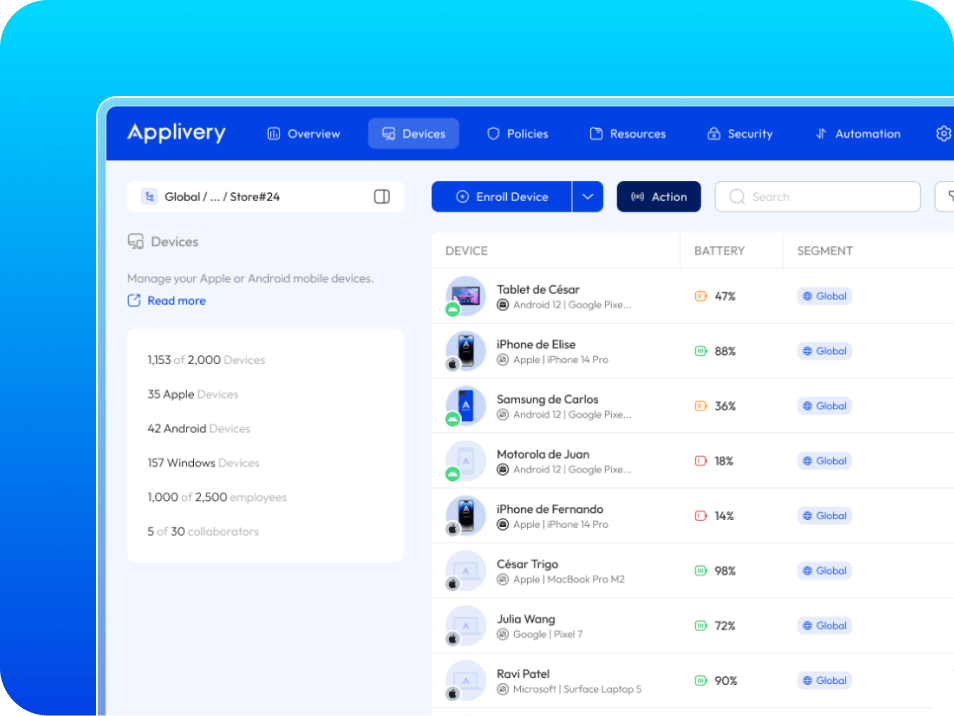
Platforms like Applivery make this possible by centralizing management, automating maintenance, and providing real-time visibility into every device. In practice, it’s not about adding new tools or processes. It’s about managing better. And that’s where sustainability begins.
Start managing your devices in a more efficient and sustainable way. Automate maintenance, gain full visibility over your fleet, and reduce unnecessary replacements with Applivery. Request a free demo today and see how much time and impact your IT team can save.
Frequently Asked Questions (FAQ)
How does an MDM help reduce the carbon footprint in IT?
An MDM like Applivery reduces the carbon footprint by optimizing the device lifecycle. It keeps devices updated, prevents unnecessary replacements, and minimizes manual interventions, reducing resource consumption and electronic waste.
What is the relationship between device management and IT sustainability?
IT sustainability is directly linked to how devices are managed. Efficient device management reduces energy consumption, extends hardware lifespan, and avoids unnecessary purchases, lowering the overall environmental impact.
Why are corporate devices replaced too early?
In many organizations, devices are replaced based on fixed timelines rather than their actual condition. Lack of visibility and proper maintenance leads to issues that are often mistaken for obsolescence, even when devices could continue to perform effectively.
What are the benefits of automation in device management?
Automation keeps devices in an optimal state without constant manual intervention. It reduces errors, improves operational efficiency, and lowers energy consumption caused by inefficient or misconfigured systems.
What is Autonomous Endpoint Management (AEM)?
Autonomous Endpoint Management (AEM) refers to the ability of a platform to automatically maintain devices, handling updates, configuration, and remediation based on performance data, without continuous manual input.