

For IT teams, the news is therefore about more than the devices Apple has introduced. The priority is deciding how to roll out iOS 27, what to do with Intel Macs, how to add the new iPhones to Apple Business Manager, and which policies to apply to Apple Intelligence and Siri AI before updates and devices reach users.
The essentials: iOS 27, iPadOS 27 and macOS 27 arrive on Monday, September 14, 2026. iPhone 18 Pro preorders begin on September 12, and the devices arrive in stores on September 18. The iPhone Duo, Apple’s first foldable phone, arrives on October 23. Before then, IT should review update deferrals, its inventory of Intel Macs, which do not support macOS 27, and its Apple Intelligence policy by country.
Apple Event 2026: what businesses should prepare for
| What’s new | Impact on IT | Recommended action |
|---|---|---|
| iOS 27, iPadOS 27 and macOS 27 | A major new version arrives on several platforms at the same time | Define an update deferral, test with a pilot group first and verify policies |
| macOS 27 without Intel Mac support | The fleet is split between Apple silicon and Intel devices | Identify processor architecture and keep Intel Macs on macOS 26 |
| iPhone 18 Pro with eSIM in more markets | Corporate line activation processes change | Review eSIM provisioning with carriers |
| iPhone Duo | iOS 27.1, Touch ID, eSIM and a new inner display | Review minimum OS version, biometrics and app compatibility |
| Apple Intelligence and Siri AI | Availability and features differ by platform and region | Define policies by device and user profile |
| Apple Watch and AirPods with intelligent audio features | New scenarios arise in meetings and confidential settings | Establish internal usage rules |
iPhone 18 Pro and Pro Max: what changes for businesses
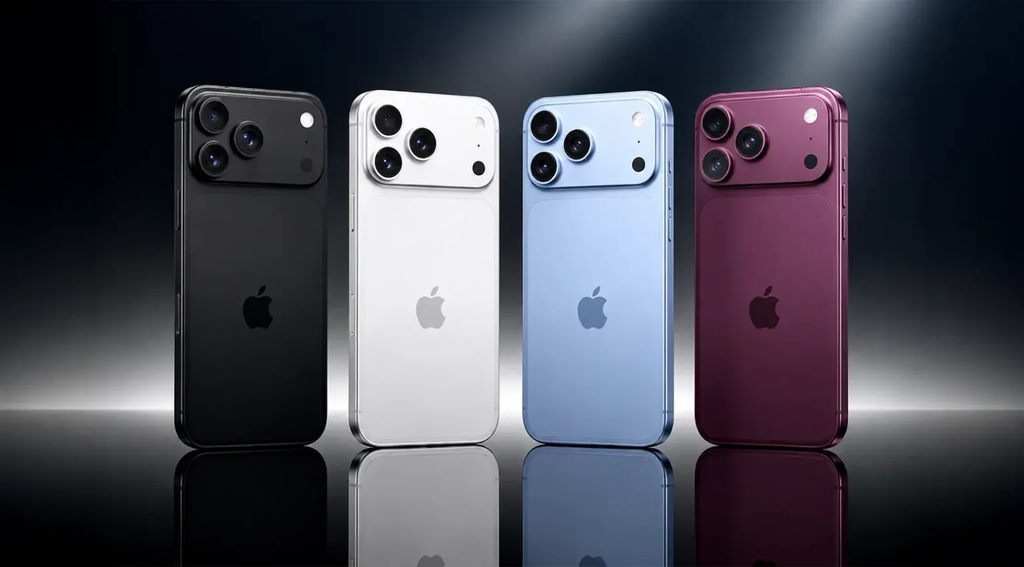
Apple introduced the iPhone 18 Pro and iPhone 18 Pro Max on September 9. They feature the 2-nanometer A20 Pro chip, Apple’s C2 modem, Wi-Fi 7 and a 48 MP main camera with a variable aperture. The announced battery life reaches 36 hours of video playback on the Pro and 45 hours on the Pro Max.
Preorders begin on September 12, and the devices will be in stores on September 18, with storage options ranging from 256 GB to 2 TB.
For an IT team, however, two changes are particularly relevant. The first is corporate eSIM. Apple is expanding sales of the eSIM-only iPhone 18 Pro to twelve markets. Spain is not among them and retains the physical SIM tray, but businesses with users in the United States, Canada, Mexico, Japan or any of the other affected markets will need to review how they activate and transfer lines.
The second is Apple Reference Image. This feature signs information from the sensor during capture and generates an unalterable reference image. It may be particularly relevant for organizations where photographs serve as evidence, although Apple has not yet detailed all the verification mechanisms available outside the device.
iPhone Duo: why Apple’s first foldable iPhone also affects IT
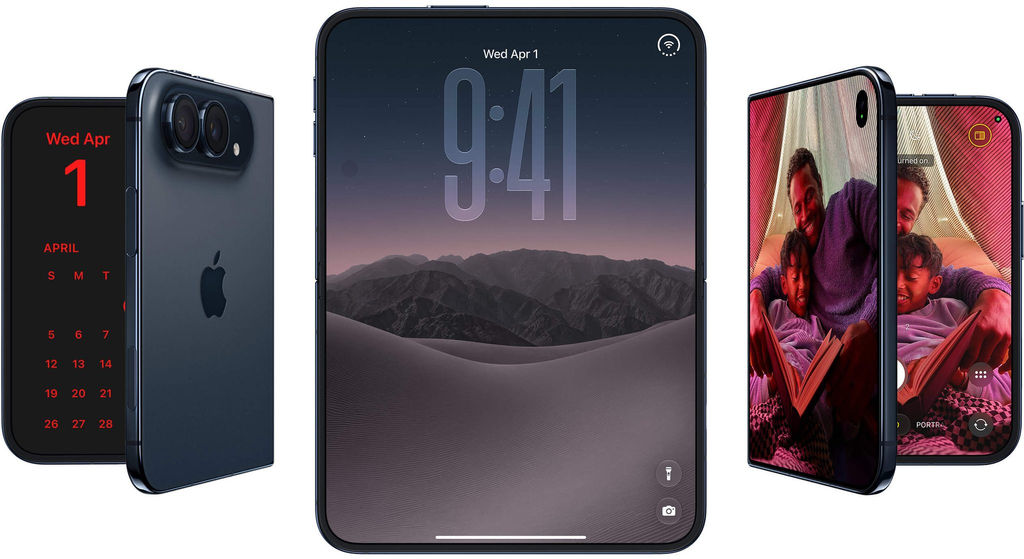
The iPhone Duo arrives on October 23 and will be Apple’s first foldable iPhone. It has a 5.4-inch outer display and a 7.6-inch inner display, and features the A20 Pro, titanium, a dual battery and IP68 protection. It also supports working with two apps through Split View.
Businesses should prepare for four aspects before adding it to their fleets.
The device will ship with iOS 27.1, so minimum OS version rules must account for it. It uses Touch ID in the side button instead of Face ID, which may also require updates to user documentation. In addition, it will be eSIM-only in every market.
The inner display introduces another consideration. Internal apps may appear in a format similar to the one used on iPad, so organizations that distribute corporate apps should validate how they work in Split View and on the new display size before rolling them out to users.
iOS 27 in businesses: what changes in update management
iOS 27 and iPadOS 27 will be available on September 14, 2026, as will macOS 27 Golden Gate. iOS 27 remains compatible with iPhone 11 and later.
For organizations, the main change is the evolution of update management through Declarative Software Update Management. As we explained in our WWDC 2026 recap, managing new versions requires a more declarative and controlled strategy.
Before rolling out iOS 27 broadly, IT should decide how long to defer the update in production, select a pilot group to update first, and verify that policies, profiles, apps and configurations continue to work correctly on the new version.
What happens to Intel Macs?
macOS 27 Golden Gate does not support devices with Intel processors and can only be installed on Macs with Apple silicon. For IT departments, this makes processor architecture another criterion for segmenting the fleet. Intel Macs will need to remain on macOS 26 while compatible devices move to macOS 27.
Before deployment, organizations should have an up-to-date inventory that lets them quickly identify which devices can be updated and which will move to a separate maintenance track.
Apple Intelligence and Siri AI: different policies by platform
Apple Intelligence becomes available on September 14 in 15 languages, including Spanish. Siri AI launches in beta, with initial availability varying by platform and region.
For businesses, this may create different experiences even for the same employee, depending on the device they use.
A corporate AI policy should therefore go beyond a general decision to allow or block Apple Intelligence. Organizations should define which features are permitted, on which platforms and for which user profiles, especially when they handle confidential or regulated data.
Apple Watch Series 12, Ultra 4 and AirPods 5: what IT should review
Apple also introduced the new Apple Watch Series 12 and Ultra 4, as well as AirPods 5. The watches include Audio Intelligence features such as Live Rewind, which can retrieve the last 15 seconds of a conversation, while AirPods 5 add features such as Live Translation.
In settings where conversations, meetings or confidential data are involved, these capabilities may require a corporate policy rather than being treated solely as user features.
Applivery manages iOS, iPadOS, macOS and tvOS, but not Apple Watch. In these scenarios, the response must therefore come from the organization’s internal policy, not solely from its UEM platform.
How Applivery fits into the September launch
For businesses managing Apple devices at scale, the launch can be addressed across three areas: automated enrollment, system updates and eSIM connectivity.
Automated enrollment with Apple Business Manager
When customer or reseller numbers are configured in Apple Business Manager, devices purchased through corporate channels can be assigned to Applivery before they reach users.
On first startup, the device enrolls automatically and can receive its corporate policy, apps, and Wi-Fi, email and VPN profiles without IT having to configure it manually.
This allows a new iPhone 18 Pro or iPhone Duo to be added directly to the organization’s Apple device management setup.
Managing iOS and macOS updates
Update deferrals can be defined in a policy, and pending updates can be managed individually or in bulk. The process is described in the OS update management guide.
This makes it possible to separate pilot devices that should test iOS 27 from day one from those that will temporarily remain on the previous version while IT validates compatibility and policies.
Corporate eSIM provisioning
eSIM is also becoming an increasingly important part of device management. On iOS, a command can provide the iPhone with the carrier’s server address so the device can download its profile. The SIM or eSIM is also recorded in the inventory and linked to the corresponding device. Learn more on our page about remote eSIM provisioning and management.
With models such as the eSIM-only iPhone Duo, a corporate provisioning process becomes necessary. This requires the organization’s carrier to support eSIM provisioning for businesses.
If you need a more practical process for an executive device, see also how to set up a company iPhone 18 Pro with UEM.
Frequently asked questions about iOS 27 and the Apple Event 2026
When will iOS 27 be released?
iOS 27 and iPadOS 27 will be released on September 14, 2026. Compatibility extends to iPhone 11 and later. The iPhone Duo will arrive later with iOS 27.1 preinstalled.
Can Intel Macs install macOS 27?
No. macOS 27 Golden Gate requires Apple silicon. Organizations with Intel Macs will therefore need to keep those devices on macOS 26 and manage them as a separate part of their fleet.
What should a business do before rolling out iOS 27?
The priority is to define an update deferral for production devices, update a pilot group first, validate apps and policies, and then check the status of devices that have moved to iOS 27.
Why does the iPhone Duo affect device management?
It ships with iOS 27.1, uses Touch ID, works only with eSIM and adds a 7.6-inch inner display that may change how corporate apps appear.
Is Siri AI available in the European Union?
At launch, it is not available on iPhone, iPad or Apple Watch, but it is available on Mac and Vision Pro. It launches in beta and only in English; Spanish arrives in October 2026.
The Apple Event 2026 gives IT work to do before September 14
For consumers, the September Apple Event brings new devices. For IT, it brings a new OS version, new enrollment scenarios, a Mac fleet divided by processor architecture, and more decisions about AI and connectivity.
If you manage iPhones, iPads or Macs in a business, now is the time to review update deferrals, your pilot group, Apple Business Manager, Apple Intelligence policies and your eSIM process.
And if you want to centralize this process, you can manage your Apple devices with Applivery alongside Android and Windows from a single platform.