

Every June, WWDC sets the direction for the year ahead in the Apple ecosystem. The 2026 edition left a clear headline for the general public: a renewed Siri and the next generation of Apple Intelligence. But behind the spotlight, there is a much more relevant story for any organization managing iPhone, iPad, or Mac devices across its fleet, 2026 is the year Apple makes declarative management the standard.
Here’s a summary of what Apple has confirmed through its official channels and, above all, what it means for IT teams managing Apple devices in enterprise environments.
Apple Intelligence comes to the endpoint
Apple introduced version 27 of its main operating systems: iOS, iPadOS, macOS, watchOS, visionOS, and tvOS. The most visible update is a rebuilt Siri, now with its own app, capable of understanding what users have on screen and using personal context to search across messages, emails, photos, and other system elements.
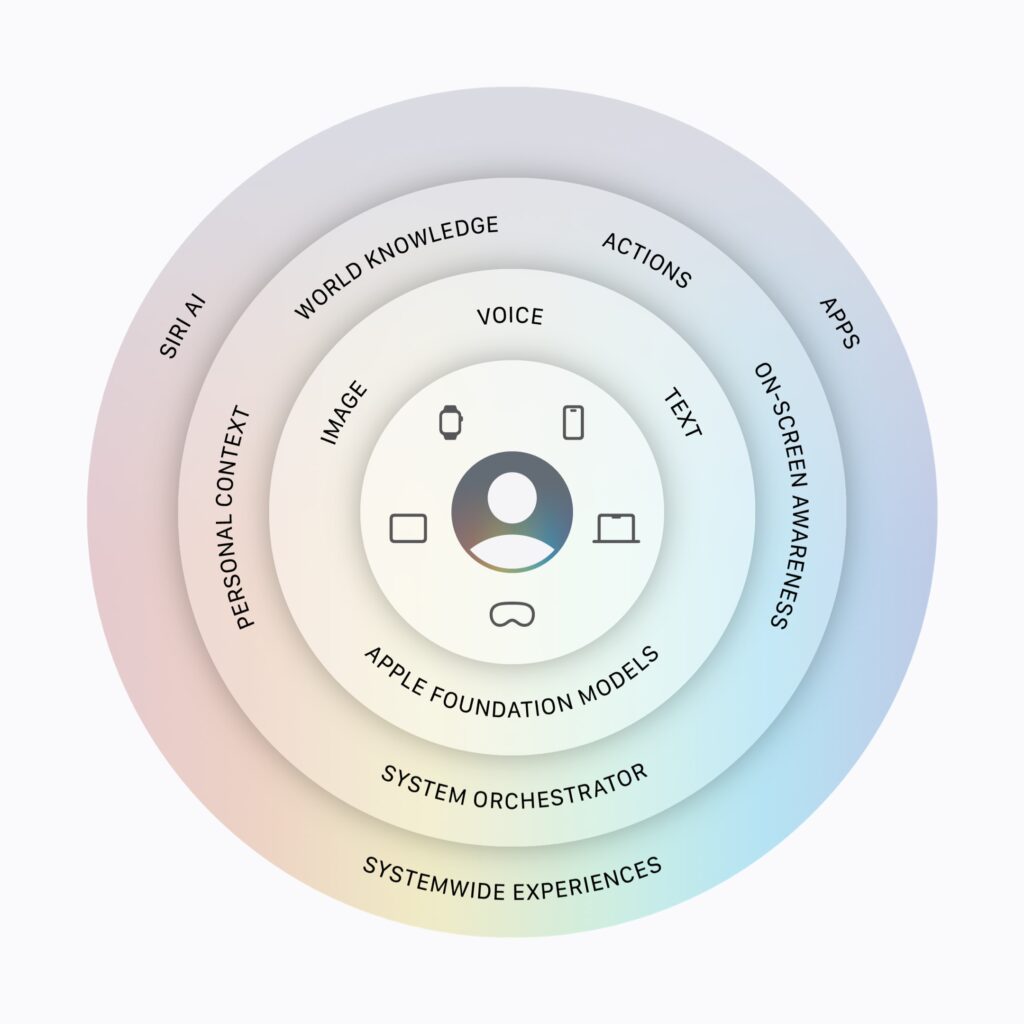
Apple Intelligence and the new Siri are coming to iOS, iPadOS, macOS, watchOS, and visionOS 27, although not to tvOS. On iPhone, they will be available on compatible models, including iPhone 16 and later, iPhone 15 Pro, and iPhone 15 Pro Max.
For users, this means a smarter and more contextual experience. For IT, it raises a different question: how do you govern corporate devices that are increasingly able to interpret information, act across apps, and rely on the user’s own data?
Smarter apps, new distribution challenges
For teams building applications, Apple has strengthened its AI development tools. Foundation Models, Apple’s way of using its AI models from Swift, now supports images, can use cloud-based models, and allows developers to connect other providers such as Claude or Gemini. Alongside it, Core AI has been designed to run models directly on the device by taking advantage of Apple silicon.
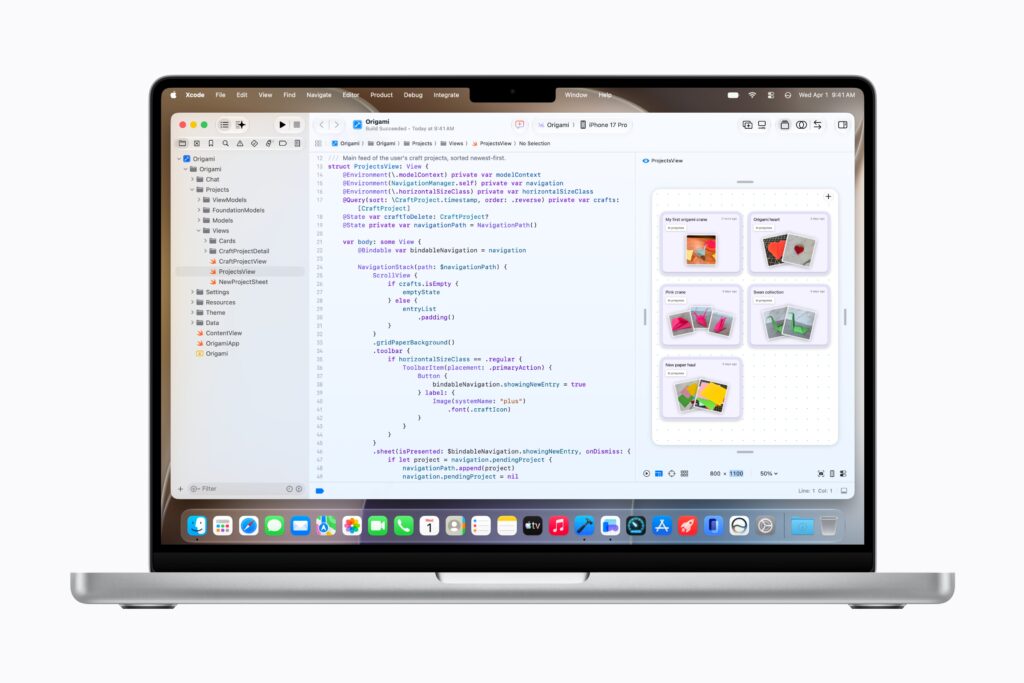
App Intents also allows app content to appear in system search and enables Siri to act on it without complex configurations. Development tools are evolving too: Xcode 27 introduces AI assistants from Anthropic, Google, and OpenAI, while SwiftUI adds improvements to help teams build interfaces faster.
For companies developing internal applications, this can accelerate the creation of new corporate tools. But it also reinforces the need to distribute, test, and update those apps securely and in a controlled way.
Declarative device management
This is the section that directly affects any organization managing an Apple fleet. Apple has documented it in its official deployment guide, and the changes are significant.
The key concept is Declarative Device Management, Apple’s management model that allows devices to apply and report configurations more autonomously. Instead of relying only on commands sent by the MDM server, the device understands the desired state, applies changes, and reports its status more efficiently.
With the 27 releases, this model becomes more important across several critical areas.
- Goodbye to “classic” software update management: in version 27, the traditional method for managing system updates stops working. Organizations need to move to declarative software update management, known as Declarative Software Update Management.
- Configuration profiles are being modernized: traditional profiles can now be delivered as declarative resources, with greater flexibility around where they are hosted and built-in integrity verification.
- Backups no longer restore management: on iPhone, iPad, and Apple Vision Pro running version 27, restoring from a backup no longer restores the previous management configuration. The device automatically re-enrolls, ensuring it receives the current configuration instead of an outdated one.
- More network control, declaratively: new network configurations, such as VPN, encrypted DNS, and other connectivity settings, can now be managed declaratively, with availability varying by operating system.
Apple is moving device management toward a more modern, more autonomous model based on the real state of the device.
What’s changing in Apple device management
For IT teams, declarative management is no longer a future evolution. It is becoming a practical priority. Before deploying iOS 27, iPadOS 27, or macOS 27 in corporate environments, organizations should review how they currently manage updates, configuration profiles, device enrollment, and backup restores.
It will also be important to review network and security strategies. If new declarative configurations affect VPN, encrypted DNS, certificates, or corporate connectivity, IT teams will need to validate that their management solution is ready to apply those policies consistently.
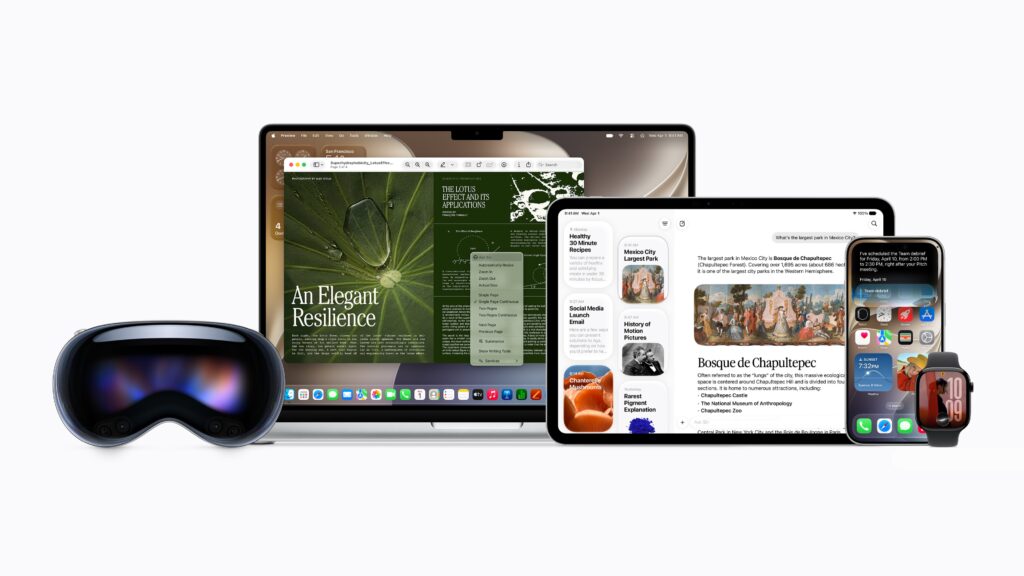
And there is one more point: Apple Intelligence. The arrival of smarter features on the device does not remove the need for control. On the contrary, it requires organizations to define which features are allowed, on which devices, for which users, and under which security conditions.
What IT teams should prepare before iOS 27 & macOS 27
| Change | What IT should review |
|---|---|
|
Declarative Software Update Management |
Update policies and MDM compatibility |
|
Declarative profiles |
Critical configurations, integrity, and deployment |
|
Re-enrollment after backup restore |
Enrollment and restore processes |
|
Declarative network configuration |
VPN, DNS, certificates, and secure connectivity |
|
Apple Intelligence and Siri AI |
Usage policies, availability, and control by profile or region |
How Applivery fits into this new stage of Apple device management
For organizations managing Apple devices at scale, these changes reinforce the need for a platform that can centralize policies, updates, configurations, applications, and fleet visibility.
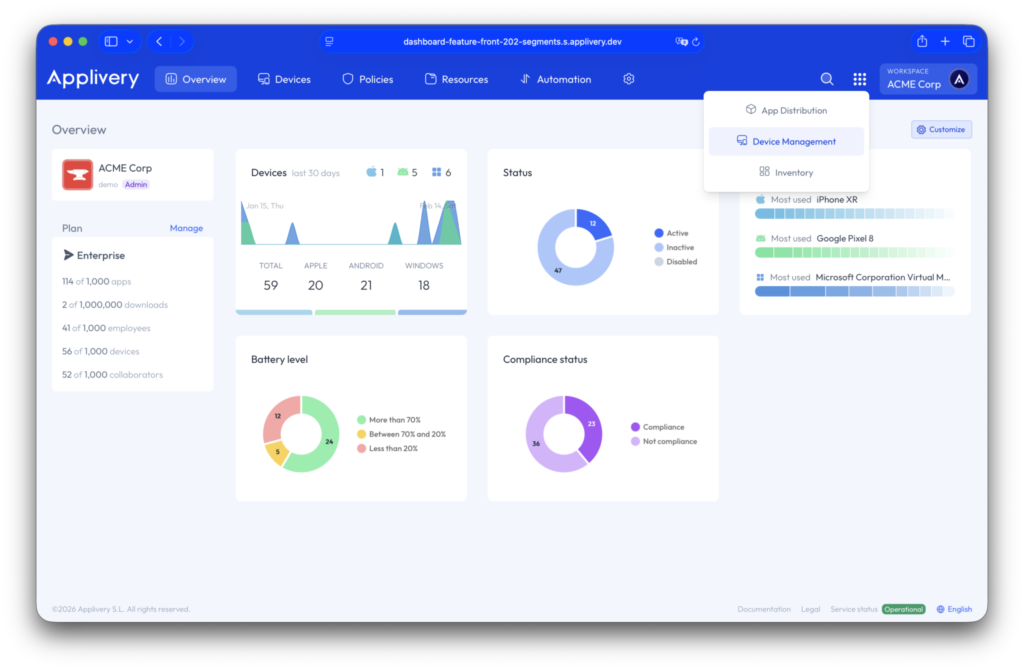
At Applivery, we closely follow every update to make sure managing your Apple fleet, alongside Android and Windows, remains simple from a single dashboard, with data hosted in the European Union.
As Apple moves toward more declarative and intelligent models, device management will become even more strategic for maintaining control, security, and operational continuity. We will continue sharing how each change translates into real-world management as the betas evolve.
WWDC 2026 confirms a new stage for Apple management
WWDC 2026 confirms a direction the industry had been anticipating for some time. Apple is making its devices smarter, more autonomous, and more declarative.
For users, that means new productivity experiences. For businesses, it marks a new stage in Apple device management.
If you manage iPhone, iPad, or Mac devices in your organization, now is the time to plan the transition to declarative management with confidence, before the final version arrives this fall.
Want to understand how this affects your organization? Talk to our team of consultants and discover how our customers manage their Apple devices with Applivery.